

Glass and insulating glass units: types, processing, sealing and selection

Panoramic glazing on a contemporary building.
Glass in a window, door or facade can admit daylight, limit overheating, reduce heat loss, provide privacy and help manage the risk of injury. These properties depend on different materials and processes. Clear glass is not necessarily energy efficient, toughened glass is not necessarily bullet resistant, and three panes form two cavities.
This guide explains glazing components, how to read their specifications and what to ask before ordering. The build-ups shown are examples; a project specification must account for its loads, exposure and required performance.
Contents
- Glass, processing and insulating glass units
- Main types of glass
- Coatings for heat retention and solar control
- Glass processing: strength, breakage, edges and shape
- Enamelled, painted and printed glass
- How an insulating glass unit is built
- Spacers, desiccant and edge seals
- What is structural glazing?
- Safety, security and bullet resistance
- Fire-resistant glazing: E, EW and EI
- Choosing glazing for the installation location
- Care, documentation and common questions
1. Glass, processing and insulating glass units
Glass is the individual pane. Its composition, colour, surface and coatings affect what you see through it and how it handles light and heat. Processing includes toughening, laminating, edge finishing and bending. An insulating glass unit (IGU) combines panes with sealed cavities, spacers and edge seals.
A pane’s properties are not the same as a window’s performance. Compare the complete configuration, including the frame, edge zone and installation. Two units with the same overall thickness can have different coatings, pane thicknesses and cavity fills.
2. Main types of glass
Clear float glass
In float production, molten glass spreads across molten tin to create flat, parallel surfaces. Float describes the manufacturing process, not a safety rating. Standard clear glass may show a green tint, especially along the edge or at greater thicknesses.
Body-tinted glass
Bronze, grey and other tinted glasses contain colour throughout the pane. Thickness affects the perceived tint. Tinted glass can absorb more solar energy, so check thermal stress, visible light transmission and solar gain for the intended location.
Frosted and patterned glass
A frosted surface scatters light and makes outlines less distinct. Privacy still depends on lighting, distance and what is behind the glass. Patterned glass uses a textured surface to distort the view, with the effect varying by pattern. See the Satin Clear insulating glass unit (24 mm) for a frosted example.
Extra-clear and anti-reflective glass
Low-iron glass reduces the green tint. Anti-reflective treatments reduce reflections. These are different properties: use low-iron glass for colour neutrality and consider an anti-reflective finish when reflections interfere with viewing.
3. Coatings for heat retention and solar control
Compare U-value for heat transfer, g-value for total solar energy admitted and visible light transmission for daylight. A lower U-value means less heat transfer; a lower g-value admits less solar heat. Use values for the actual configuration and compare like with like: Ug describes the glass unit, while Uw describes the whole window.
Low-emissivity glass
Low-E coatings reduce radiant heat transfer and help retain indoor heat. The coating position depends on the specified glazing build-up. See the energy-efficient single-chamber IGU 4-16-4M (24 mm).
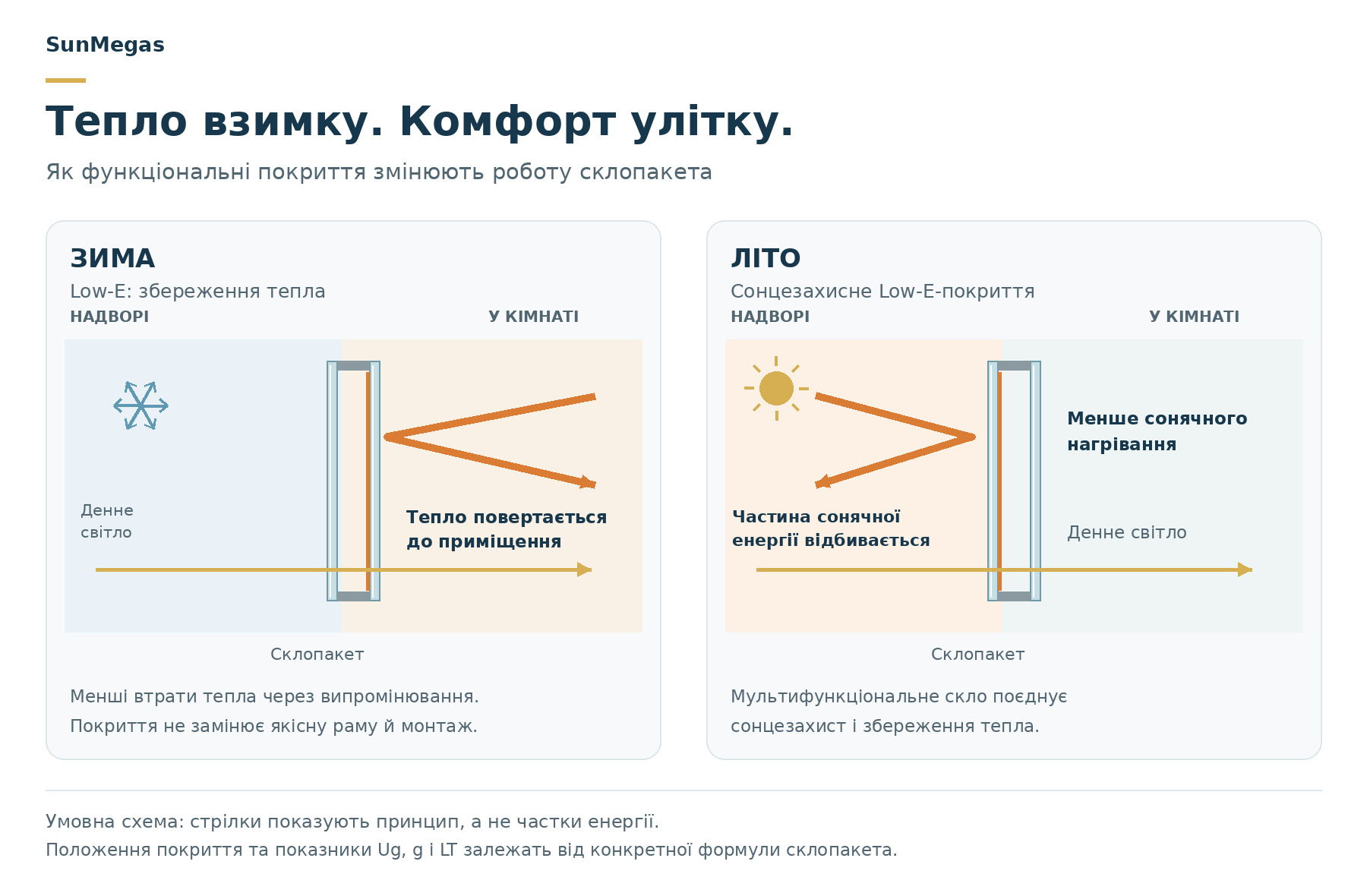
Solar-control and multifunctional glass
Solar-control glazing limits unwanted solar gain. It is useful for exposed facades and large openings, where overheating and glare may matter as much as winter insulation. Multifunctional coatings combine low emissivity with solar control, but colour, reflectance and light transmission still vary by product. Compare the multifunctional double-chamber IGU 6-14-6-16-4 (44 mm).
4. Glass processing: strength, breakage, edges and shape
Annealed, heat-strengthened and toughened
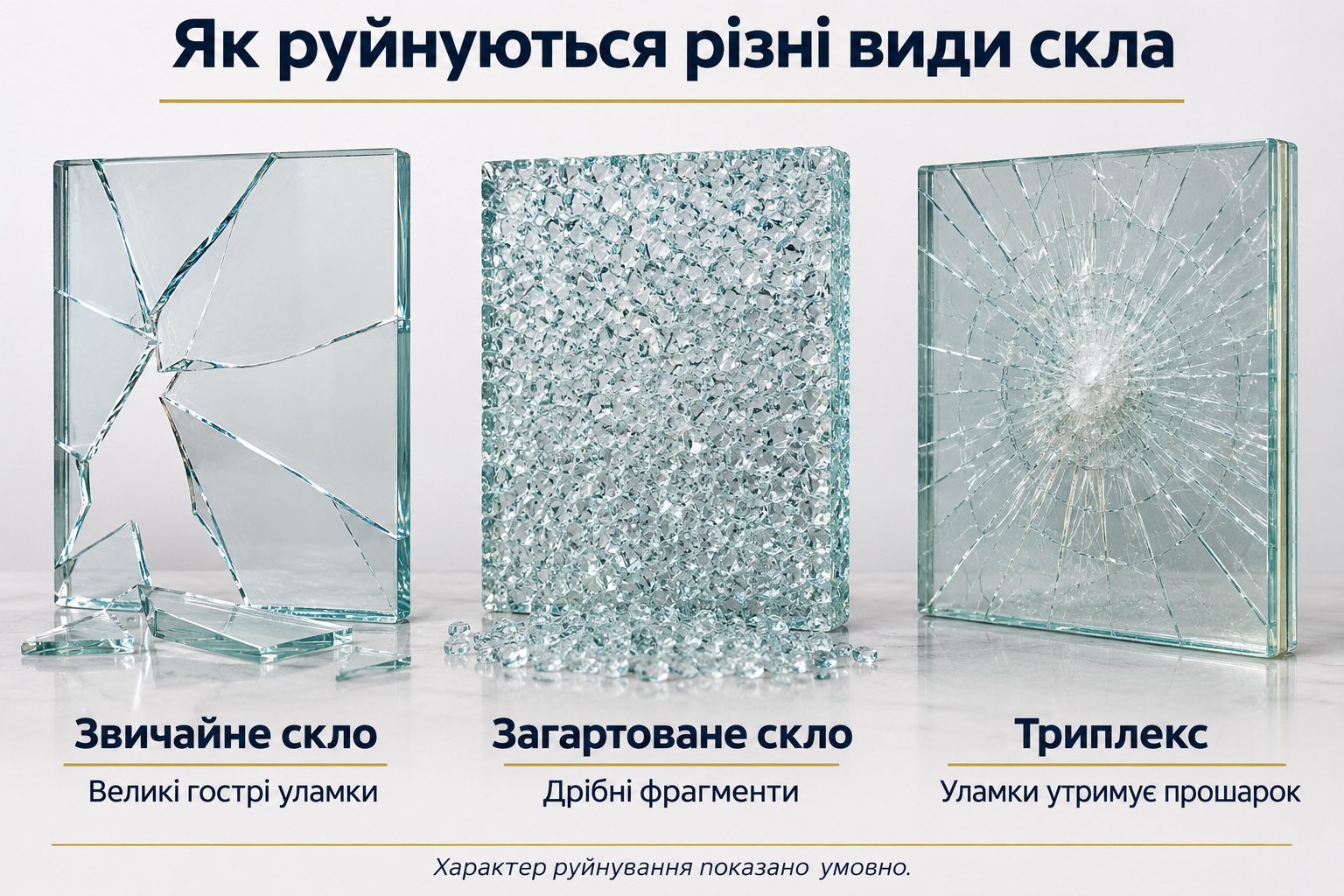
Annealed glass can break into large, sharp fragments. Heat strengthening increases resistance to mechanical and thermal stress, but its breakage differs from that of fully toughened glass. Toughened glass typically breaks into smaller fragments. Cutting, drilling and edge work must normally be completed before heat treatment.
Laminated glass
Two or more panes are bonded with an interlayer, such as PVB, EVA or an ionoplast. The interlayer can retain fragments after breakage. Specify the exact assembly for the intended use: laminated glass is not automatically burglar resistant, bullet resistant or suitable as a barrier after breakage.
Edge finishing and bending
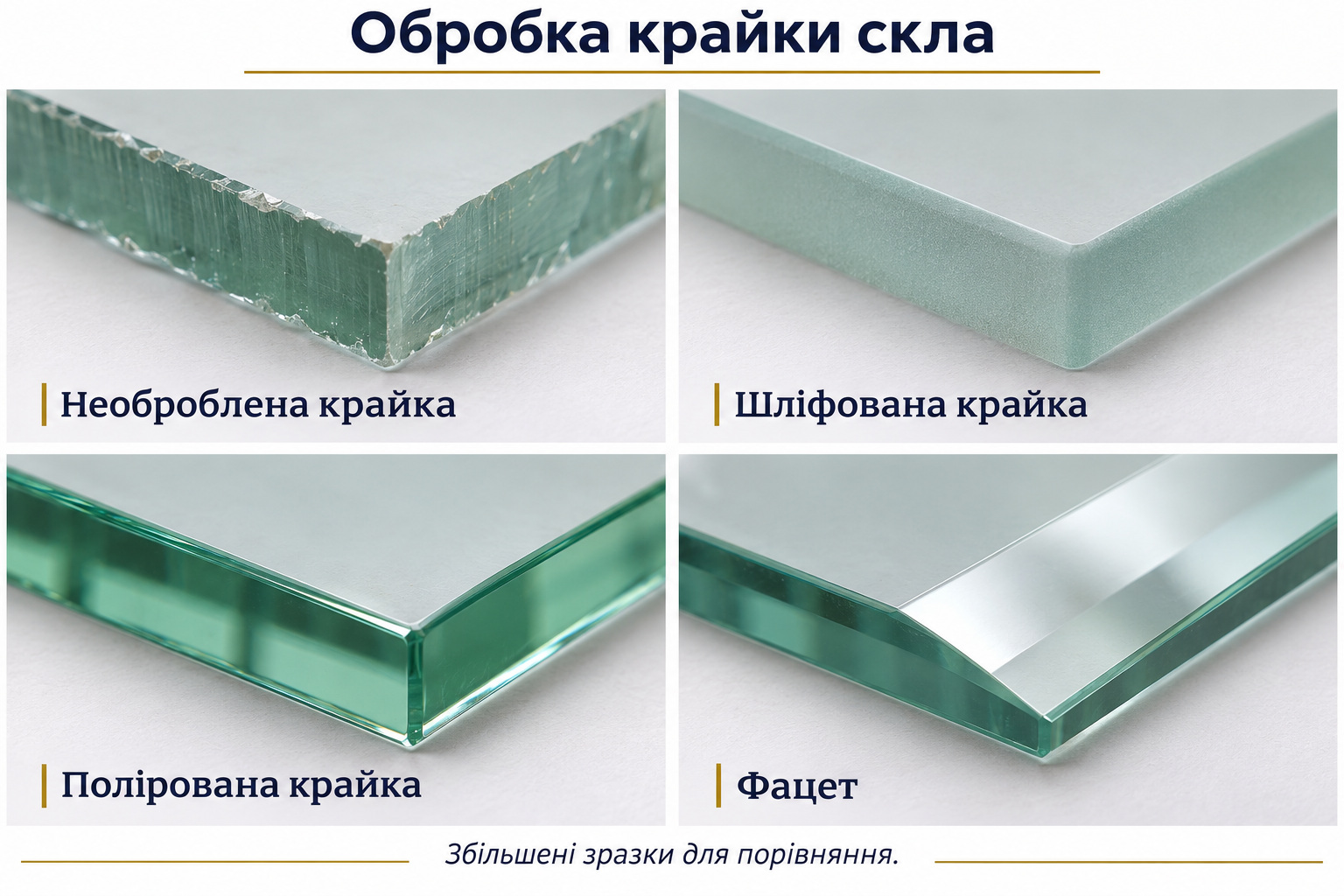
An as-cut edge, a ground edge, a polished edge and a bevel serve different purposes. Exposed edges should be specified for their appearance and intended handling or loading. With curved glass, agree the radius, dimensions, tolerances and optical expectations before production.

5. Enamelled, painted and printed glass
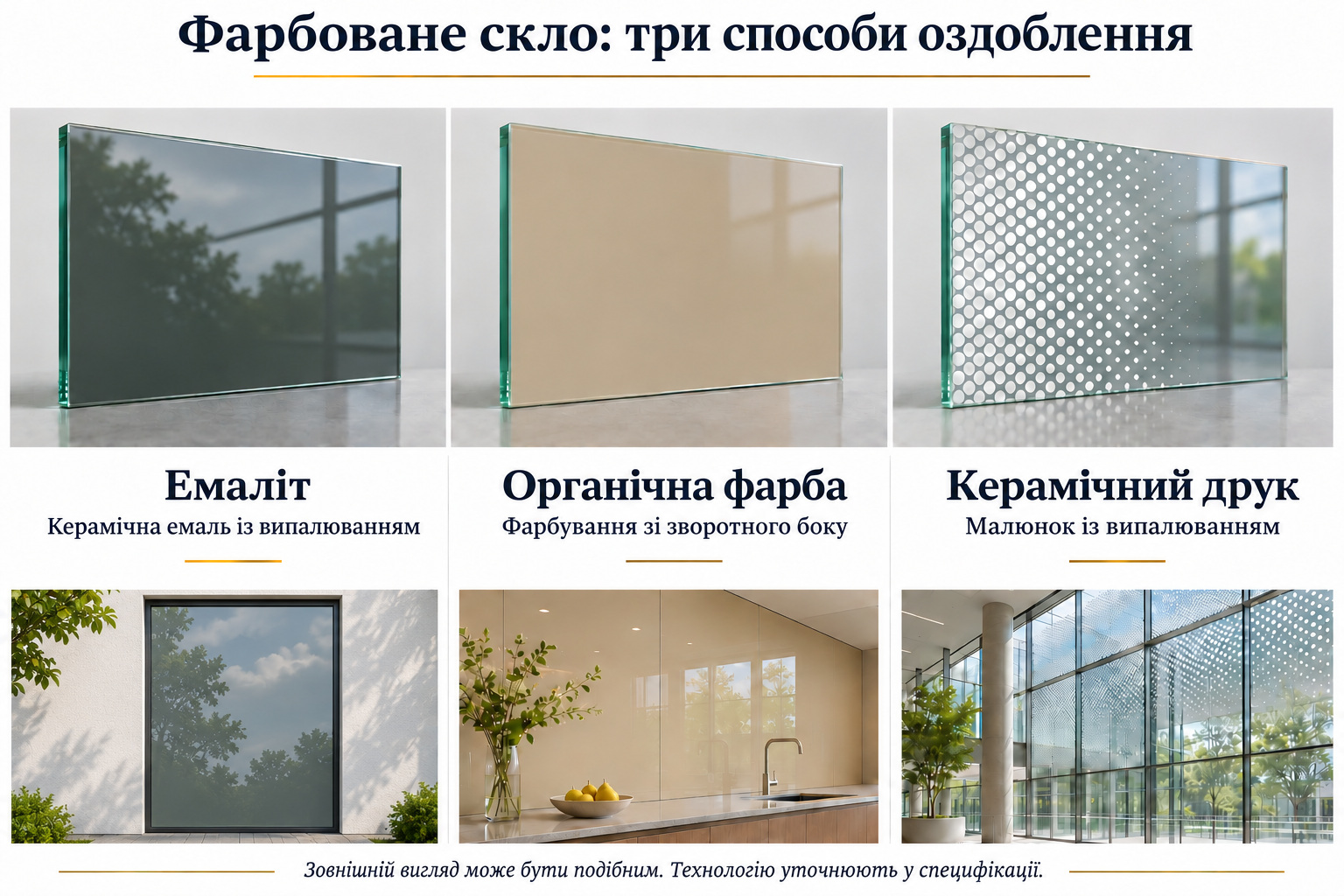
Ceramic enamel is applied and fused to the glass during processing. An opaque enamelled pane may look glossy from outside but is designed to conceal what is behind it. Organic paint includes systems such as polyurethane and acrylic coatings. Compatibility with adhesives, sealants, moisture and the intended exposure must be checked against the product data.
Ceramic digital printing can apply patterns with varying coverage. A film, an organic paint and a ceramic print are not interchangeable. For facade panels, agree colour, reflectance, opacity, orientation and a sample viewed under actual lighting. For solvents and emissions, check the specific product’s safety data and curing instructions rather than generalising from the coating family.
6. How an insulating glass unit is built
One, two and three cavities
A single-chamber unit contains two panes and one cavity. The notation 4–16–4 describes two 4 mm panes separated by a 16 mm cavity, giving a nominal 24 mm overall thickness. See the single-chamber IGU 4-16-4 (24 mm).
A double-chamber unit contains three panes and two cavities. 4–14–4–14–4 is a 40 mm example. Compare the energy-efficient double-chamber IGU 6-16-4-16-4 (46 mm). A three-chamber unit has four panes and three cavities. Adding panes increases weight; check frame capacity, hardware, handling, thermal performance and light transmission.
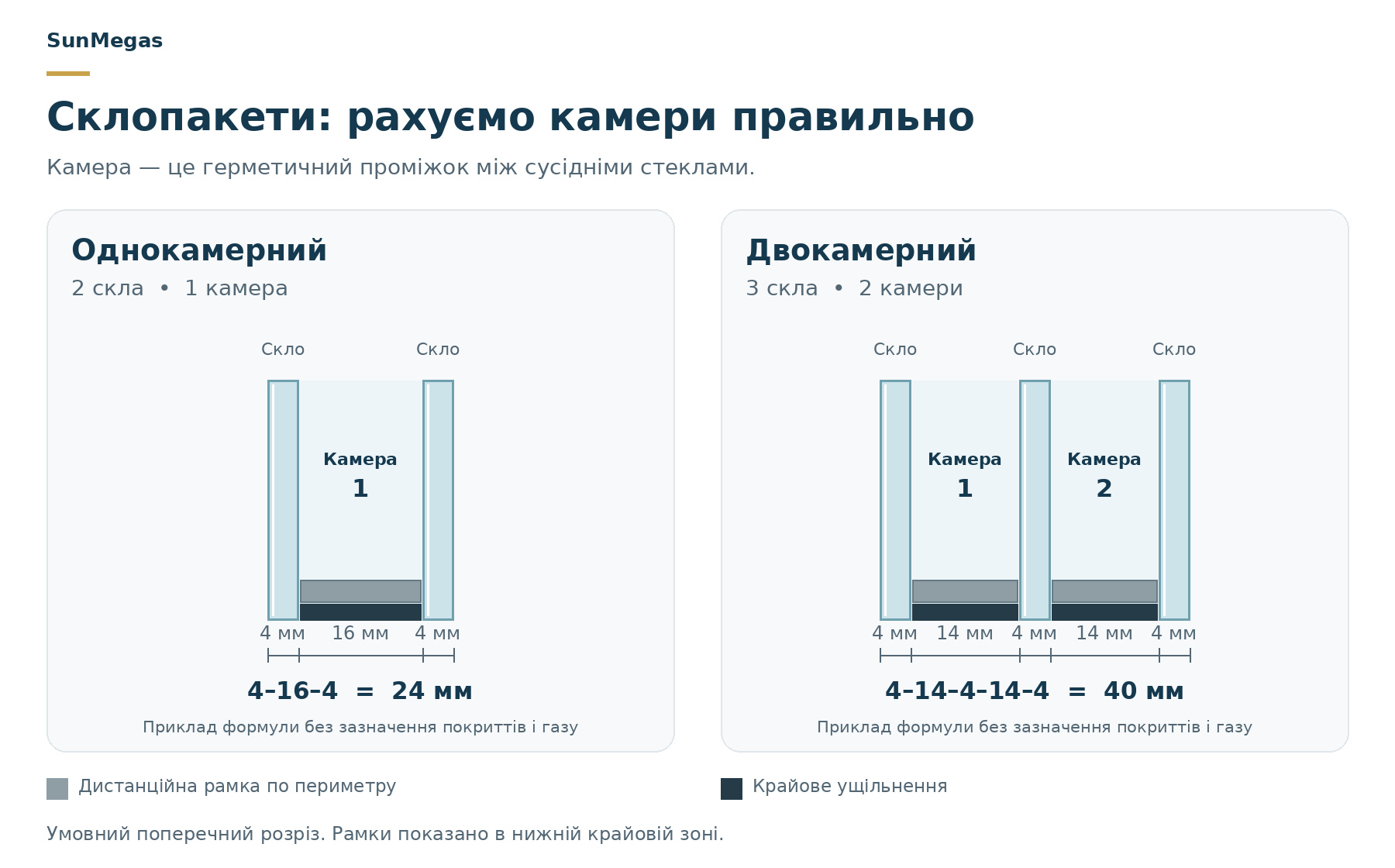
Reading the specification
Specify the pane order from outside to inside, thickness and processing of each pane, coating surface, cavity widths, fill gas, spacers and seals. A thickness formula alone does not tell you whether a pane is toughened, laminated or coated.
Gas fill and sound insulation
Units may use dry air or a specified gas such as argon. Krypton may be considered for particular designs with narrower cavities. Acoustic performance depends on the complete assembly: different pane thicknesses or an acoustic interlayer may help. The frame, seals, vents and installation can also transmit sound, so cavity count alone is not an acoustic specification.
7. Spacers, desiccant and edge seals
The spacer holds the panes apart. A thermally improved spacer can reduce heat transfer at the edge, but its effect depends on the whole glazing and frame. See the single-chamber unit with a plastic spacer (24 mm) as a product example. Desiccant adsorbs residual moisture in the cavity.
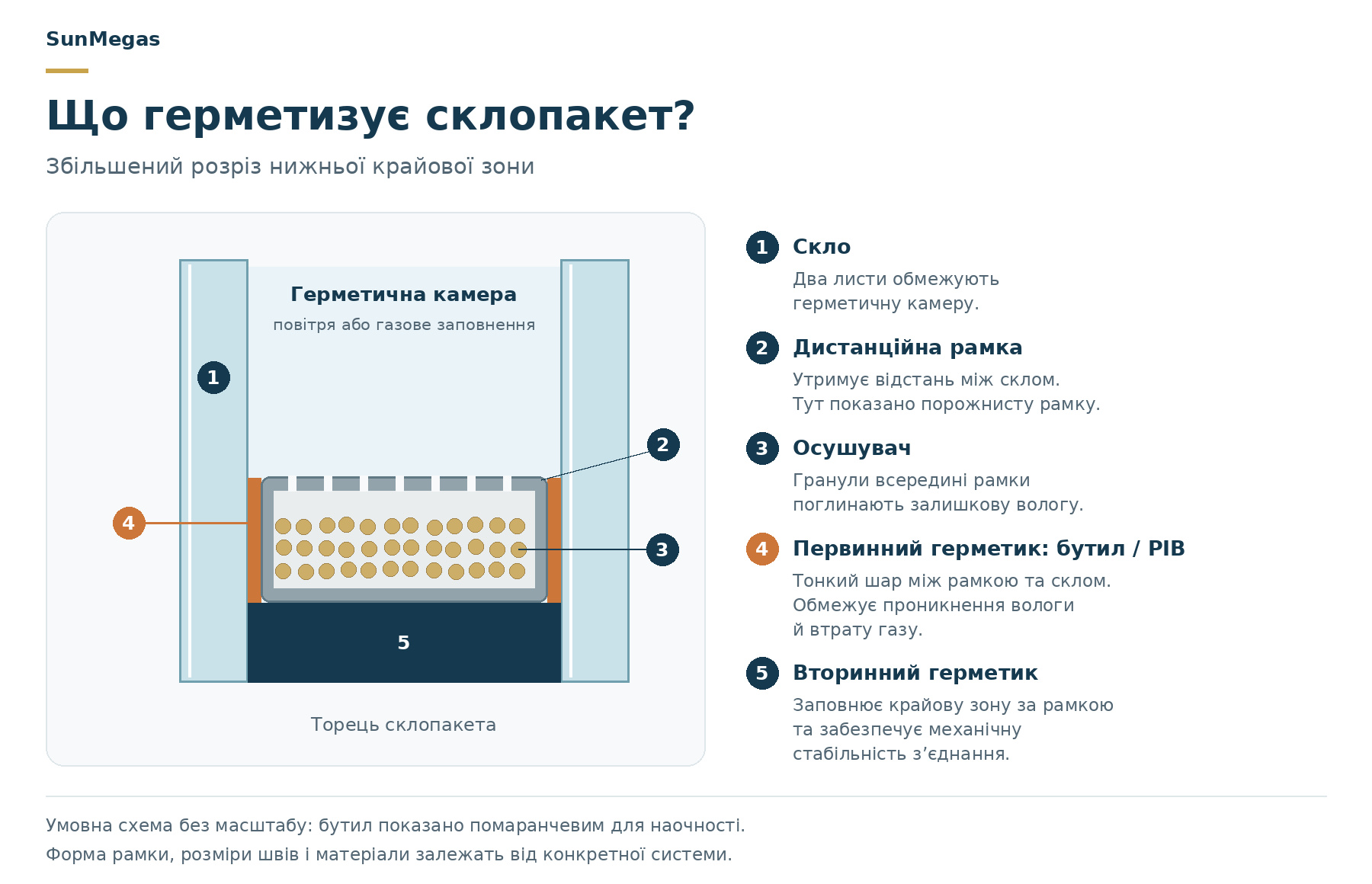
The primary seal is often polyisobutylene (PIB), which limits water vapour ingress and gas loss. The secondary seal helps hold the unit together and protects the edge assembly. Its chemistry and geometry depend on the design. For exposed edges or structural glazing, use an explicitly compatible system specified for that application.
In production, panes are cleaned, the spacer and desiccant are prepared, panes are assembled, and the edge is sealed. The unit is then checked against the specified dimensions and construction. Moisture between the panes can indicate a loss of seal integrity.
8. What is structural glazing?
In structural glazing, a designed adhesive joint transfers specified loads between the glass and its supporting elements. The facade can have very few visible exterior pressure caps. The term refers to how the system is assembled, not to the number of cavities in a glass unit.
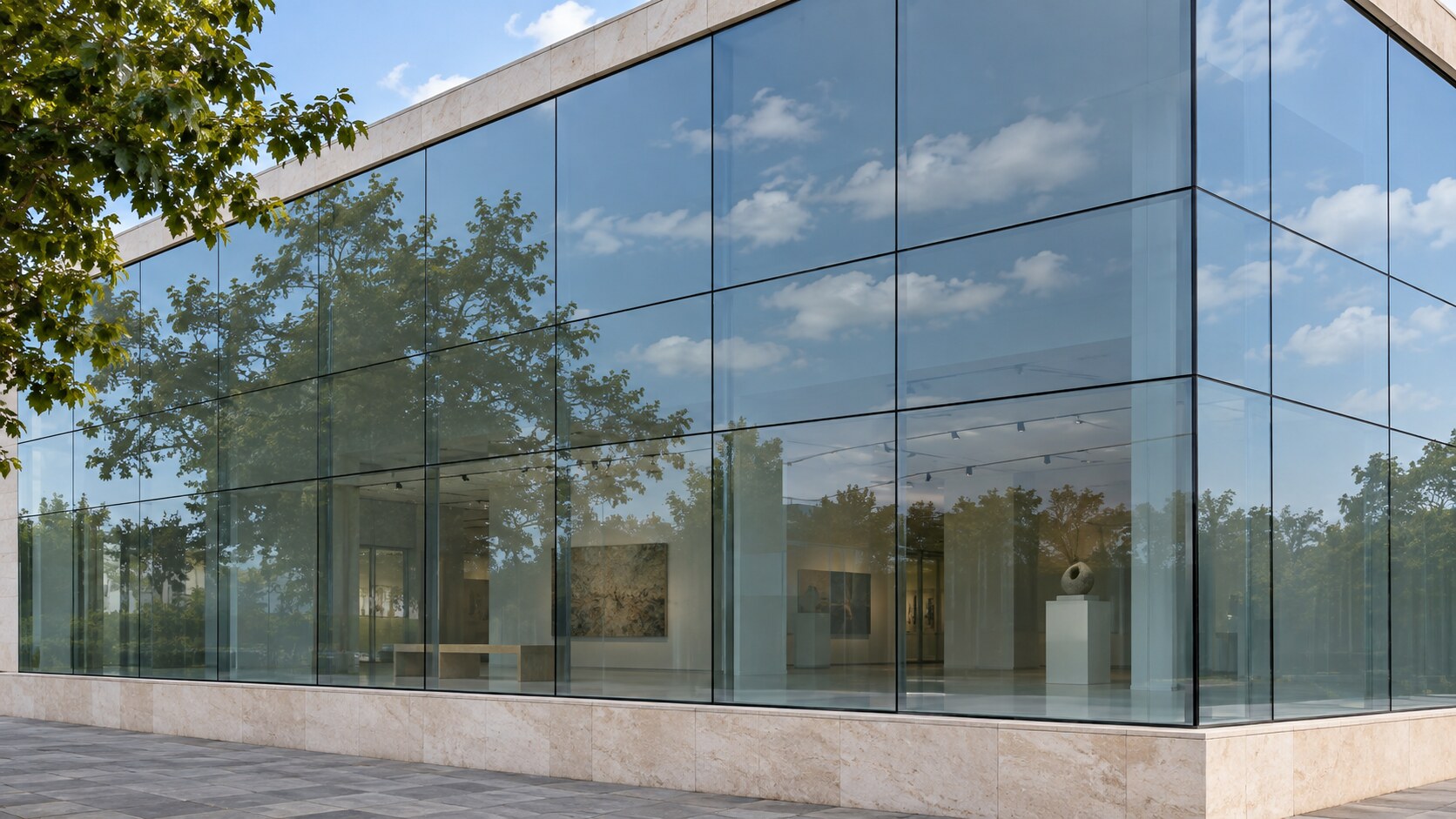
Distinguish the IGU edge seal, the structural bond to the support and the weather seal between panels. Their functions differ. Structural glazing requires checks for loads, joint geometry, movement, adhesion, compatibility and any mechanical support or retention required by the system. A flush appearance alone does not establish the engineering design.
9. Safety, security and bullet resistance
Safety glazing, resistance to forced entry and bullet resistance describe different tested properties. Toughened and laminated glass can reduce injury in different ways, but a product description is not a substitute for the tested classification and the specified installation.
For security glazing, compare the required threat level with the tested assembly. Glass, frames, fixings and installation conditions must be suitable together. For bullet resistance, check the applicable classification, test conditions and whether the protected side must be free of splinters. Do not infer performance from glass thickness or the word “laminated”.
10. Fire-resistant glazing: E, EW and EI
E denotes integrity. EW combines integrity with a limit on heat radiation. EI combines integrity with insulation criteria. The time attached to the classification describes the period achieved in the specified fire test; it is not a guarantee for every installation or incident.
Specify the complete tested system: glass, frame, supports, seals, orientation, dimensions and installation conditions. A fire-resistant pane cannot confer a classification on an incompatible frame or assembly.
11. Choosing glazing for the installation location
- Heated rooms: compare the whole-window thermal performance and consider an energy-efficient IGU.
- Sunny elevations: compare solar gain, daylight, glare and shading together; assess thermal stress where panes are partly shaded.
- Noisy sites: specify the acoustic target for the whole opening and check glazing, frames and seals.
- Bathrooms and private spaces: check a frosted or patterned sample under daytime and evening lighting.
- Doors, low glazing and barriers: specify safety performance and retention for the actual location.
- Large facades: assess wind, glass weight, drainage, compatibility, thermal movement and access for installation or replacement.
12. Care, documentation and common questions
Condensation on the room side depends on indoor humidity, surface temperature and ventilation. Condensation between panes can indicate an edge-seal problem. External condensation can occur in some conditions even when the unit is sound. Identify the surface before choosing a remedy.
Use cleaning products approved for the glass and any exposed coating. Protect the pane from abrasive particles, construction debris and unapproved chemicals. Ask for the exact build-up, performance data, markings and relevant documentation before approving a replacement or new installation.
Explore glass and insulating glass units, or contact SunMegas for a quotation. Send the opening dimensions, location, intended use and any drawings or photographs.